



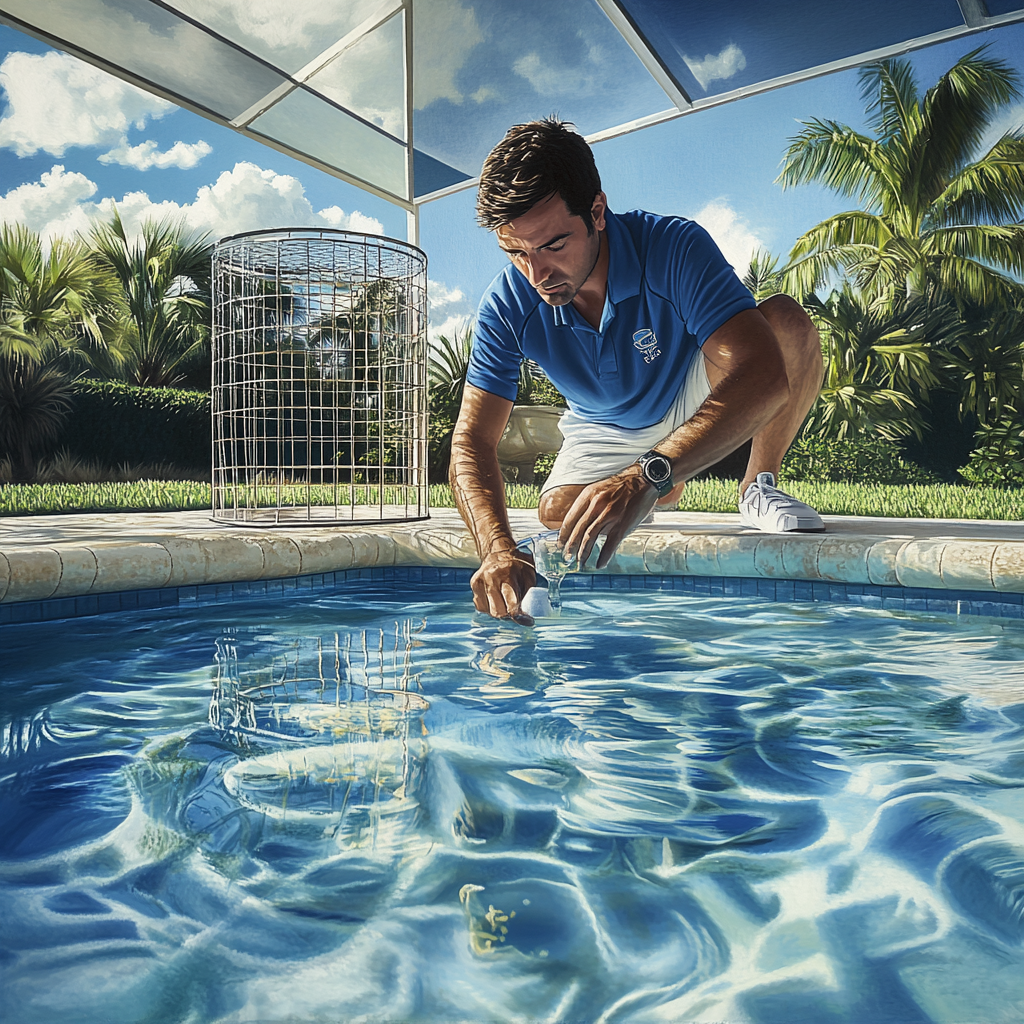
The Essential Guide to Pool Chemistry: Keeping Your Pool Crystal Clear
Maintaining a clean and healthy pool requires more than just removing debris or ensuring the water looks clear. Pool chemistry plays a critical role in the safety, longevity, and overall enjoyment of your swimming experience. In this article, we’ll explore the key elements of pool chemistry and why they’re essential, including pH, chlorine levels, alkalinity, stabilizer, and more. We’ll also discuss the risks of unbalanced water and how proper care can protect both your pool surfaces and equipment.
What Is pH and Why Is It Important?
pH measures the acidity or alkalinity of your pool water on a scale of 0 to 14, with 7 being neutral. For pool water, the ideal pH range is 7.4 to 7.6. Maintaining the right pH level ensures:
- Swimmer Comfort: Low pH (acidic water) can cause skin irritation, red eyes, and discomfort, while high pH (alkaline water) may make swimmers feel sticky or uncomfortable.
- Effective Sanitization: Chlorine works best within the ideal pH range. When pH is too high or low, chlorine becomes less effective, allowing harmful bacteria and algae to grow.
- Equipment Longevity: Imbalanced pH can corrode metal parts, damage pool liners, and reduce the lifespan of equipment.
Understanding Chlorine and Its Role
Chlorine is the primary sanitizer used to kill bacteria and keep your pool water safe. The recommended chlorine level is 1-3 parts per million (ppm). Here’s what can happen if chlorine levels are too low or too high:
- Too Low: Insufficient chlorine can lead to cloudy water, algae growth, and the proliferation of harmful bacteria, increasing health risks for swimmers.
- Too High: Excessive chlorine can cause skin and eye irritation, damage to swimsuits, and a strong chlorine odor. It can also harm pool surfaces over time.
Proper testing and adjustment ensure chlorine levels remain within the safe range, keeping your pool water healthy and inviting.
Alkalinity: The Backbone of Pool Chemistry
Total alkalinity (TA) measures the water’s ability to resist pH changes and acts as a buffer for pH stability. The ideal range is 80-120 ppm. Imbalanced alkalinity can lead to:
- Low Alkalinity: Rapid pH fluctuations, corrosion of pool surfaces and equipment, and potential staining.
- High Alkalinity: Difficulty adjusting pH, cloudy water, and the buildup of calcium deposits.
Regular testing and the use of alkalinity increasers or reducers ensure stability and prevent damage.
What Is Stabilizer and How Does It Work?
Stabilizer, also known as cyanuric acid (CYA), protects chlorine from being broken down by sunlight. It acts as a shield, especially important for outdoor pools exposed to UV rays. The ideal stabilizer level is 30-50 ppm. Here’s what to know:
- Low Stabilizer Levels: Chlorine dissipates quickly, requiring more frequent additions.
- High Stabilizer Levels: Can lead to "chlorine lock," where chlorine becomes less effective despite adequate levels.
To fix chlorine lock, partially draining and refilling the pool is often necessary to reduce stabilizer concentration.
Other Important Chemicals
- Sanitizer: Ensures water is free of harmful bacteria and viruses. Chlorine is the most common sanitizer.
- Ash (Soda Ash): Used to raise pH when it’s too low.
- Phosphate Removers: Help prevent algae growth by eliminating phosphates, which serve as a food source for algae.
- Balancers: Includes products like pH increasers, pH decreasers, and alkalinity adjusters to maintain proper water balance.
The Risks of Unbalanced Water
When pool water isn’t properly balanced, the consequences can be costly and damaging:
- Surface Damage: Acidic water can corrode plaster, tiles, and pool liners, while alkaline water can cause scaling and staining.
- Equipment Damage: Pumps, heaters, and other equipment are at risk of corrosion or buildup, reducing efficiency and lifespan.
- Health Risks: Poorly balanced water can harbor bacteria, algae, and other contaminants, posing a risk to swimmers.
Maintaining Perfect Balance
At DCL Pool Service, we use professional-grade products to ensure your pool is perfectly balanced. From sanitizers to stabilizers and phosphate removers, our team has the tools and expertise to keep your water crystal clear and safe. Regular testing, adjustment, and cleaning are the keys to a healthy, long-lasting pool.
Conclusion
Pool chemistry might seem complex, but it’s essential for maintaining a safe and enjoyable swimming environment. By keeping pH, chlorine, alkalinity, and stabilizer levels within their ideal ranges, you can prevent costly damage and ensure your pool remains a place of relaxation and fun. Let DCL Pool Service handle the details so you can enjoy peace of mind and a sparkling pool all year round.
Contact us today for professional pool care services tailored to your needs!